

Ecological Restoration Projects as Carbon Assets: Opportunities for Brazilian Agribusiness
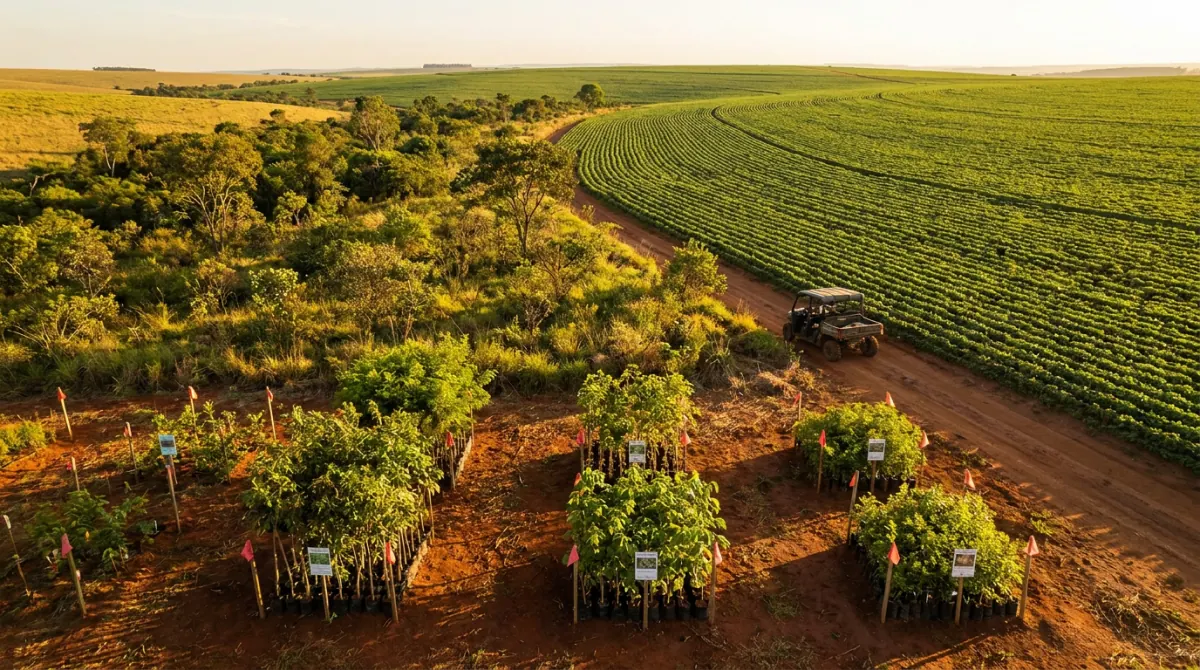
Brazil has approximately 30 million hectares of forest restoration liability — areas that, according to the Forest Code, should be native vegetation. This liability, seen by many as a problem, can be transformed into a financial asset through restoration carbon projects.
How it works
Afforestation, Reforestation, and Revegetation (ARR) and Improved Forest Management (IFM) projects quantify the carbon removed from the atmosphere by the recomposition of native vegetation. Each ton of CO₂ removed and verified generates a tradable credit in the voluntary market.
Financial potential
Depending on the location, species used, associated biodiversity, and methodology, restoration projects can generate between 5 and 20 tCO₂/ha/year. At market prices for projects with biodiversity attributes (US$ 20–50/tCO₂e), revenue per hectare can exceed the yields of conventional agricultural activities in some regions.
Beyond carbon: co-benefits and SBTN
Well-structured projects also align with the Science Based Targets for Nature (SBTN) and generate verifiable co-benefits: protection of springs, increased biodiversity, microclimate improvement, and creation of rural jobs. These attributes increase the price of credits and attractiveness for corporate buyers with biodiversity targets. Domani Carbon supports rural producers and companies in structuring restoration projects — from feasibility analysis to the commercialization of generated credits.