

IFRS S1 and S2 in Brazil: what the new sustainability standards mean for your company
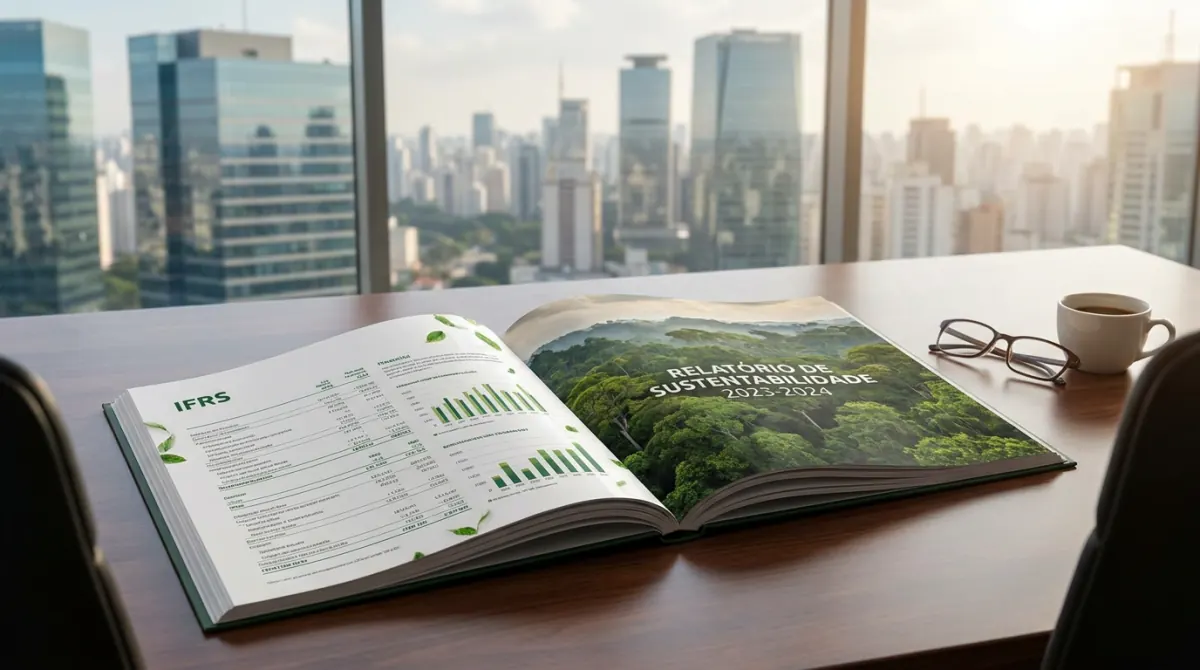
The CVM (Brazilian Securities and Exchange Commission) took a pioneering step by adopting the ISSB standards — specifically IFRS S1 (general sustainability disclosures) and IFRS S2 (specific climate disclosures) — as a reference for Brazilian publicly traded companies. For the corporate market, this changes the rules of the game.
What are IFRS S1 and S2?
IFRS S1 requires companies to disclose material information about all sustainability-related risks and opportunities that could affect their cash flows, access to finance, and cost of capital. IFRS S2 specifically focuses on climate-related risks and opportunities, aligning with the TCFD (Task Force on Climate-related Financial Disclosures) framework.
Four pillars of IFRS S2
Disclosures are organized into four blocks: Governance (how the board and management oversee climate-related risks), Strategy (how risks affect the business model), Risk Management (identification and mitigation processes), and Metrics and Targets (including Scope 1, 2, and 3 emissions).
Who needs to prepare now
Publicly traded companies and, gradually, large companies that access international credit markets are already on the radar of the CVM and ESG investors. What is mandatory for large companies today will become a market requirement for the entire supply chain in the coming years.
The role of Domani
Domani integrates GHG emissions inventory, GRI and IFRS S2-based reports, and decarbonization plans into a cohesive journey. Your company doesn't need to start from scratch — it can build on what it already does.