

How the Carbon Credit Project Life Cycle Works: From Concept to Issuance
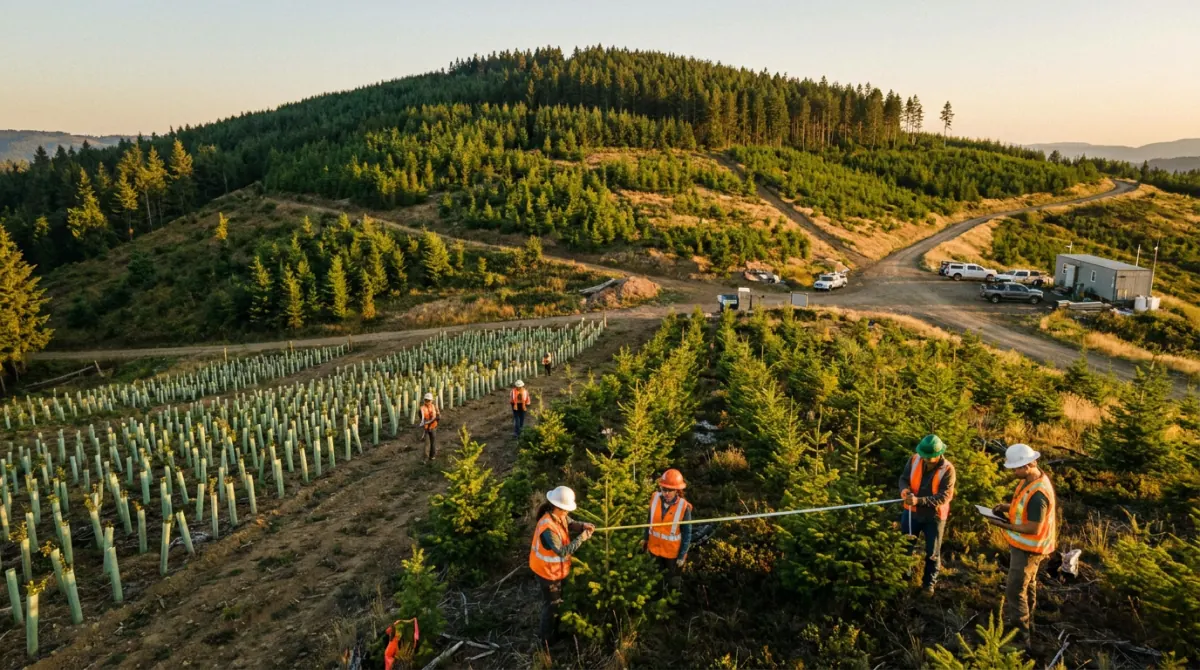
Generating carbon credits is not just about planting trees. It's a rigorous technical process that can take 12 to 36 months, depending on the methodology and certification standard. Understanding this cycle is fundamental for rural producers, forestry companies, and organizations considering monetizing their sustainable practices.
Stage 1 – Eligibility and Conception
It all starts with the eligibility assessment: the candidate project needs to demonstrate additionality (the reductions would not have occurred without the project) and align with an approved methodology — such as VERRA's VM0007 for REDD+ or CDM's AMS-I.D for renewable energy.
Stage 2 – Project Design Document (PDD)
The PDD is the central document: it describes the area, the emissions baseline, the quantification methodology, the monitoring plan, and the socio-environmental co-benefits. It is an extensive technical document, usually prepared by specialized consultants.
Stage 3 – Validation by independent audit
A Designated Operational Entity (DOE) — an accredited auditing company — reviews the PDD and issues a statement of conformity. This step is crucial for the project's credibility.
Stage 4 – Registration with the standard
After validation, the project is registered with the chosen standard (VERRA/VCS, Gold Standard, etc.) and receives a public registration number.
Stage 5 – Monitoring, verification, and credit issuance
The project continuously monitors actual reductions and periodically submits monitoring reports for audit. After verification, the credits (VCUs in the case of VERRA) are issued in the registry and made available for sale. Domani Carbon supports projects through all these stages — from initial due diligence to the commercialization of generated credits.