

Life Cycle Assessment (LCA) as a Sustainable Strategy
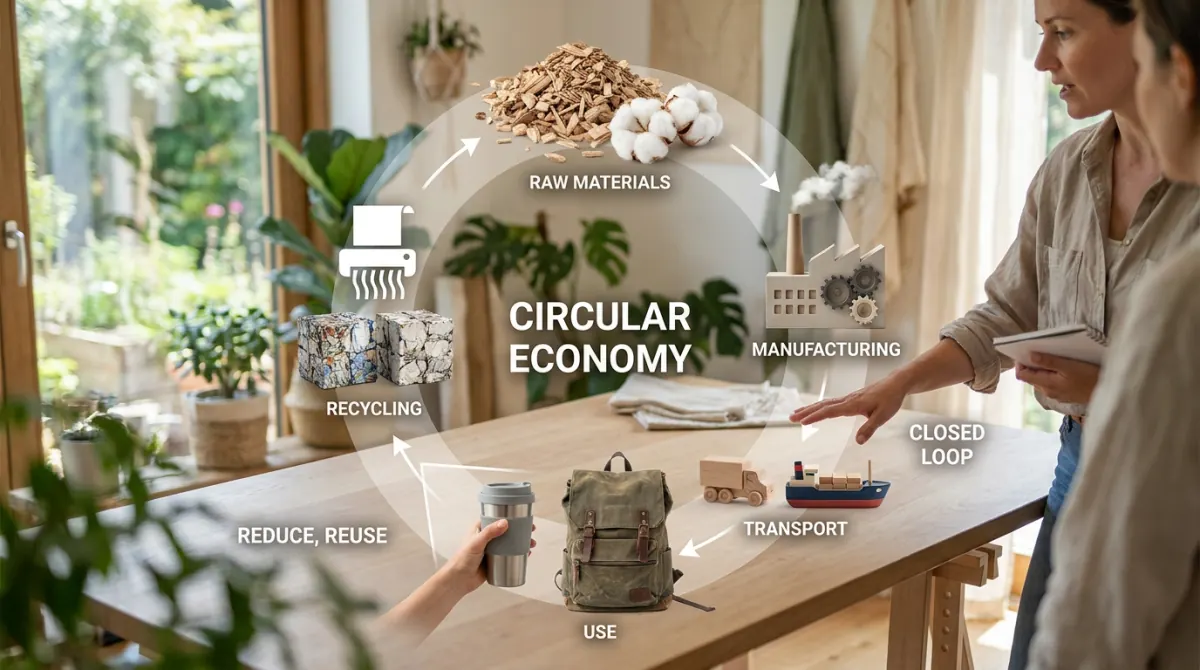
Life Cycle Assessment (LCA) is a technical methodology that evaluates the environmental impact of a product, service, or process from raw material extraction to final disposal — the famous cradle-to-grave concept.
The five stages of the life cycle
- Raw material extraction: mining, agriculture, forestry
- Manufacturing: industrial processes, assembly, packaging
- Distribution and transport: logistics to the point of sale
- Consumer use: energy consumed, durability, repairs
- End of life: disposal, recycling, composting, or reuse
LCA quantifies, at each stage, indicators such as carbon footprint (kg CO₂e), water consumption, land use, eutrophication, toxicity, and waste generation.
International standards
The main standards governing LCA are ISO 14040 and 14044, which define principles, framework, requirements, and guidelines. Companies seeking credibility in environmental communications (EPDs, eco-labels, carbon footprint declarations) follow these standards and submit their studies for independent verification.
Why apply LCA in your company?
- Identifies impact hotspots: discovers where the largest emissions and waste are — often not where you imagine.
- Guides eco-design: redesigns products to reduce impact without losing functionality.
- Supports responsible environmental marketing: verifiable data prevents accusations of greenwashing.
- Meets customer demands: large buyers and exporters increasingly request EPDs (Environmental Product Declarations).
- Prepares for regulations: the European CBAM, for example, already requires a carbon footprint declaration for products exported to the EU.
Practical cases
An packaging industry discovered through LCA that 60% of its footprint came from the maritime transport of raw materials — not production. Solution: changed supplier to a regional one, reducing emissions by 35% and logistical costs by 18%. A winery identified that glass bottles were responsible for 40% of the footprint of each wine — it started using lighter bottles and partnered for reverse logistics.
How to get started
Define the study's objective and scope, collect primary data (from your process) and secondary data (from databases such as Ecoinvent), model in specialized software (SimaPro, GaBi, OpenLCA), and interpret results with a focus on decision-making. Domani supports companies in complete LCA studies applicable to ESG reports, IFRS S2, and decarbonization strategies.